
4 Nights / 5 Days Aswan to Abu Simbel
Let the creativity continue….
For those not quite ready to return to the modern world, the journey continues.
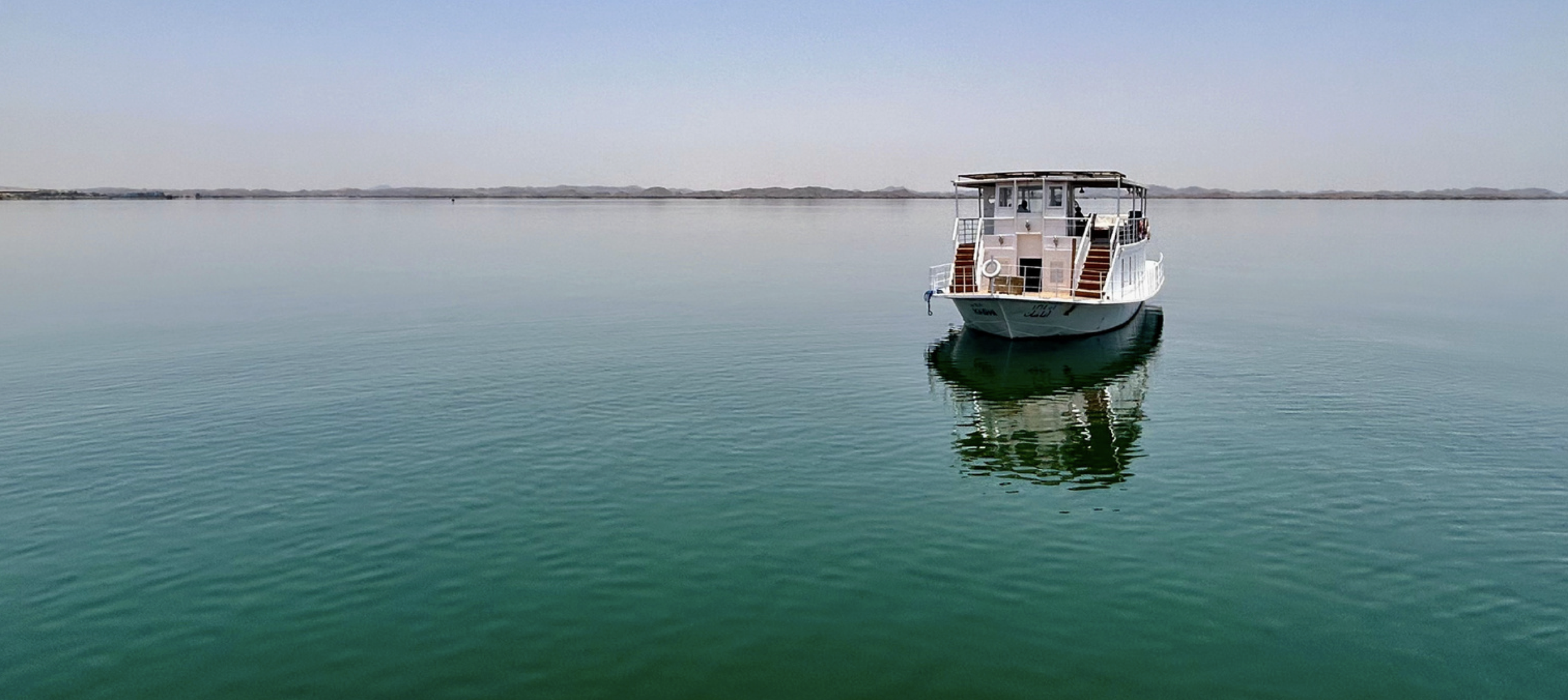
On the Monday following our Nile sail, a small group of just 6 guests will board a private yacht and slip quietly onto Lake Nasser, tracing the ancient southern frontier of Egypt over four days and five nights. This is a passage into a landscape few travelers ever see: a vast, silent expanse where the golden Nubian desert meets the still, dark water, and where entire civilizations lie hidden beneath the surface.
When the High Dam was built, temples were cut from the cliffs and painstakingly moved stone by stone to save them from the rising flood. Others were lost forever. Along this route, we’ll visit the rescued sanctuaries that now stand alone in the wilderness—places so remote that often the only sound is the wind moving across the sand.
There is wildlife here, too. Lake Nasser remains one of the only places in Egypt where Nile crocodiles still live, gliding through the same waters they have inhabited since the time of the pharaohs.
And then, at the end of the voyage, comes Abu Simbel.
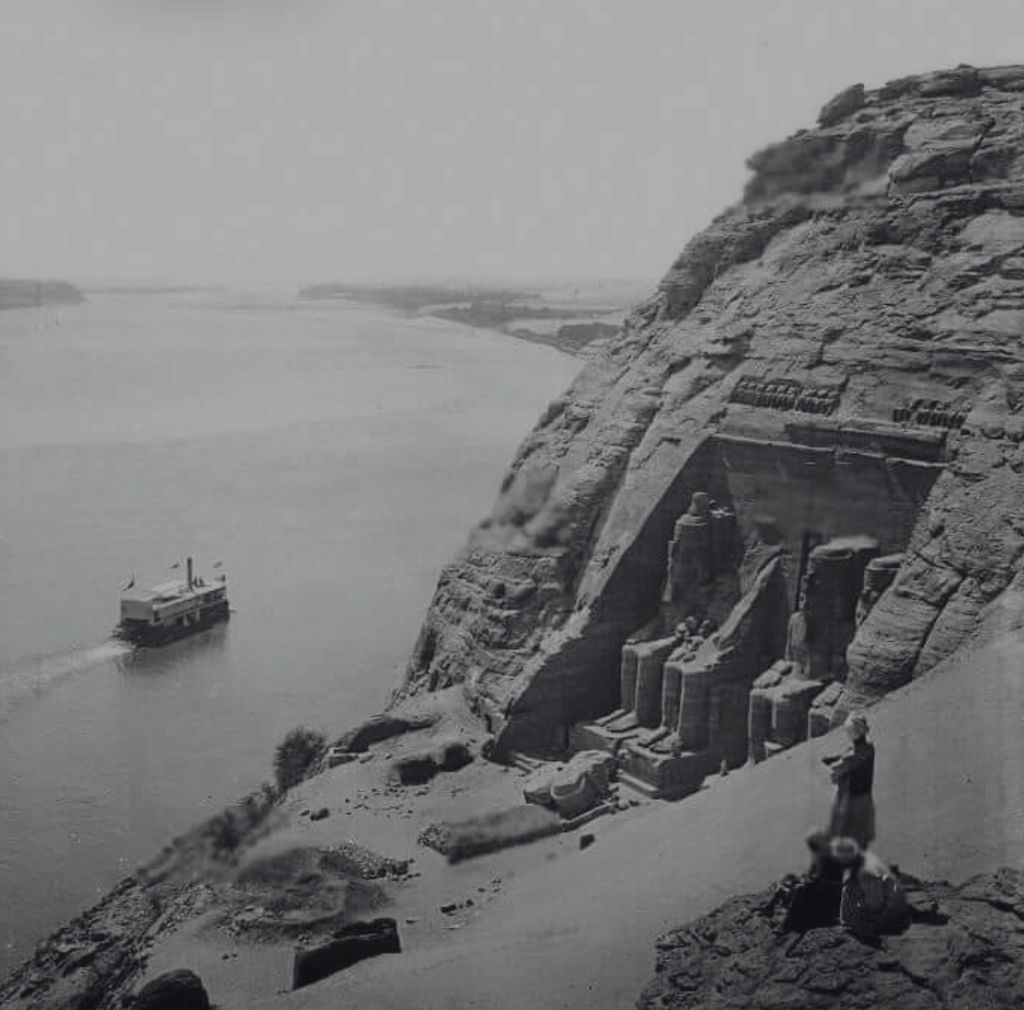
We will approach it as it was meant to be seen: from the water. Sailing in at dawn, the colossal figures of Ramses II slowly emerge from the desert horizon, just as they would have appeared to ancient travelers arriving from the south over three thousand years ago.
There is no road noise. No crowds. Just the desert, the lake, and the feeling of arriving somewhere timeless.
Only three cabins are available for this extension.
The Experience
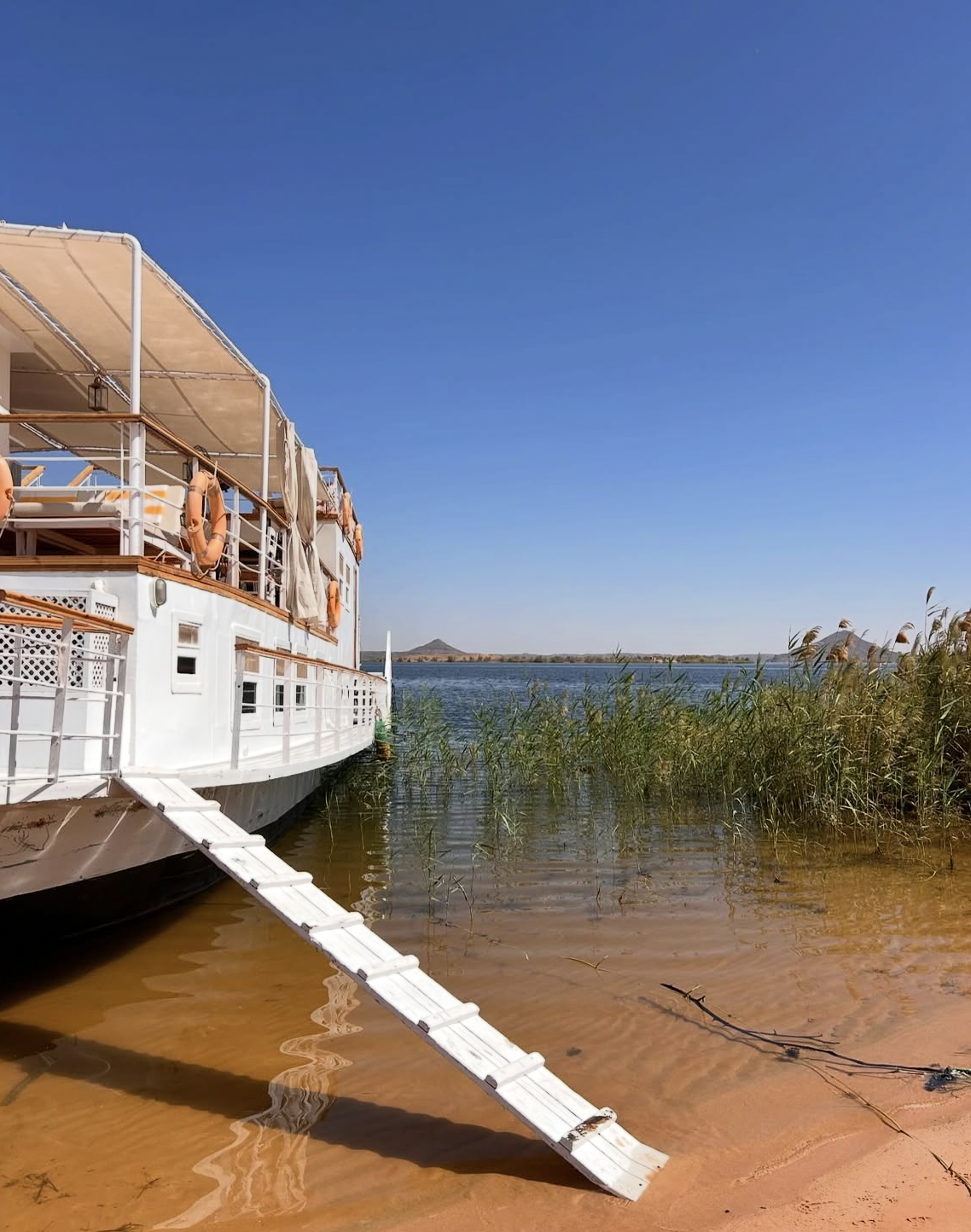
4 nights aboard a private yacht on Lake Nasser
A rare continuation of the journey, sailing deep into Egypt’s southern frontier with only a handful of fellow guests. Days unfold to the gentle rhythm of the water; nights are spent anchored beneath vast, unpolluted skies.Daily space for continuation of writing and reflection
Long, uninterrupted hours to write on deck as the desert drifts past. Early mornings with coffee and your notebook. Evenings for sharing work—or simply absorbing the stillness that has inspired storytellers for millennia.Exploration of ancient sites lost to time
Visit remote Nubian temples rescued from the rising waters after the construction of the High Dam—sanctuaries so isolated that you may have them entirely to yourself. Encounters with living history in a landscape few travelers ever reach. You’ll visit sites like Amada, Wadi El Seboua, and Qasr Ibrim—monuments with deep Nubian and Pharaonic roots that have been largely untouched by mass tourism.Birdwatching & Nature Sightings
Immerse in an ecosystem for over 100 species of birds. In the distance, the dunes, where jackals, fennec foxes and gazelles cross paths, under the watchful eyes of Nile crocodiles.Swimming, sand-boarding, and evening desert strolls
Swim the beautiful beaches in some shallow areas that are only accessible by small boats. Hike in the middle of the desert - a unique, fascinating experience: the wide open spaces, the perfect curves that shape the dunes, the silence and the emptiness bring us to an unknown balance. Thanks to the smooth sand dunes of the Nubian desert, we add to our adventure the activity of sand-boarding which reminds us of Skiing, by gliding on the sand dunes while standing on a board, sitting or lying on our stomach or on our back…Arrival at Abu Simbel as the ancients did
Sail across the open water toward Ramses II’s colossal monument, approaching from the lake in the same manner as ancient voyagers, for an ending as powerful as the journey itself.
Cruise Schedule
Monday: ASWAN – EL EKHTESSARA
Meet at your hotel or Aswan airport around 08:00 am, visits of :
- Kalabsha temple, built on the Greco-Roman model with interlocking walls and
composite capitals. The walls are covered with bas-reliefs and numerous hieroglyphic
texts. The major god Mandoulis is represented in the form of the falcon assimilated to
Horus (son of Isis and Osiris).
- Beit el ouali, this small temple, north of the Kalabsha pass, was built under Ramses II.
An entrance, flanked by two towers, gives access to a courtyard then to a vestibule and a
sanctuary carved into the rock.
- Kertassi kiosk, a part of the remains of an old small temple dedicated to Isis.
Built during the time of Trajan (98-117 AD) by the architects of Philae. It only preserves
four columns with composite capitals and two Hathoric pillars. Today its positioning on a
slight elevation reproduces the impression it gave on its original site.
Check in on board, after the visits, starting by lunch and Navigation to El Ekhtessara
(navigation starting from 12:00pm)
Overnight on board at El Ekhtessera (possibility to visit the local Fishermen Village)
Tuesday: WADI ES-SEBOUA – MEHARRAQA - DAKKA - WADI EL ARAB
Breakfast on board during the navigation
Visits:
-Wadi Es Seboua, Special visit of these gems saved from the waters. Accompanied by our
guide, it is on foot that, between lake and desert, you will move from one temple to another to
arrive at the Temple of Dakka and admire the panorama.
- Wadi es-Seboua temple: erected between the year 35 and the year 50 of the reign of
Ramses II, it is the third hemisphere that the pharaoh had built in Nubia. Amun temple,
the temple of Ramses-beloved-d'Amondans-le-domaine-d'Amon served as a resting place
for the sacred boat during its descent of the Nile. The Arabs, inspired by the stone
sphinxes with lion bodies that guarded the central aisle, named the place Ouadi es-
Seboua, the valley of the lions
- Méharraqa temple: This unfinished chapel dates from Roman times. It is dedicated to the
god Serapis and the goddess Isis. Serapis is a Greco-Alexandrian god whose cult was
instituted at the end of the 4th century BC. Possessing the attributes of Osiris and Zeus, it
allows a syncretism (union) between the Egyptian and Greek religions. Serapis has for
consort the Egyptian goddess Isis. They have a son named Harpocrates.
- Dakka temple: dedicated to Thoth, divine intelligence, master of sciences (of time and
accuracy) and Lord of letters. This "divine house" faces north. This orientation as well as
the bas-reliefs of "La Lointaine", are an allusion to the flooding and the power of the flood
which is expected in Egypt.
Return on board and navigation.
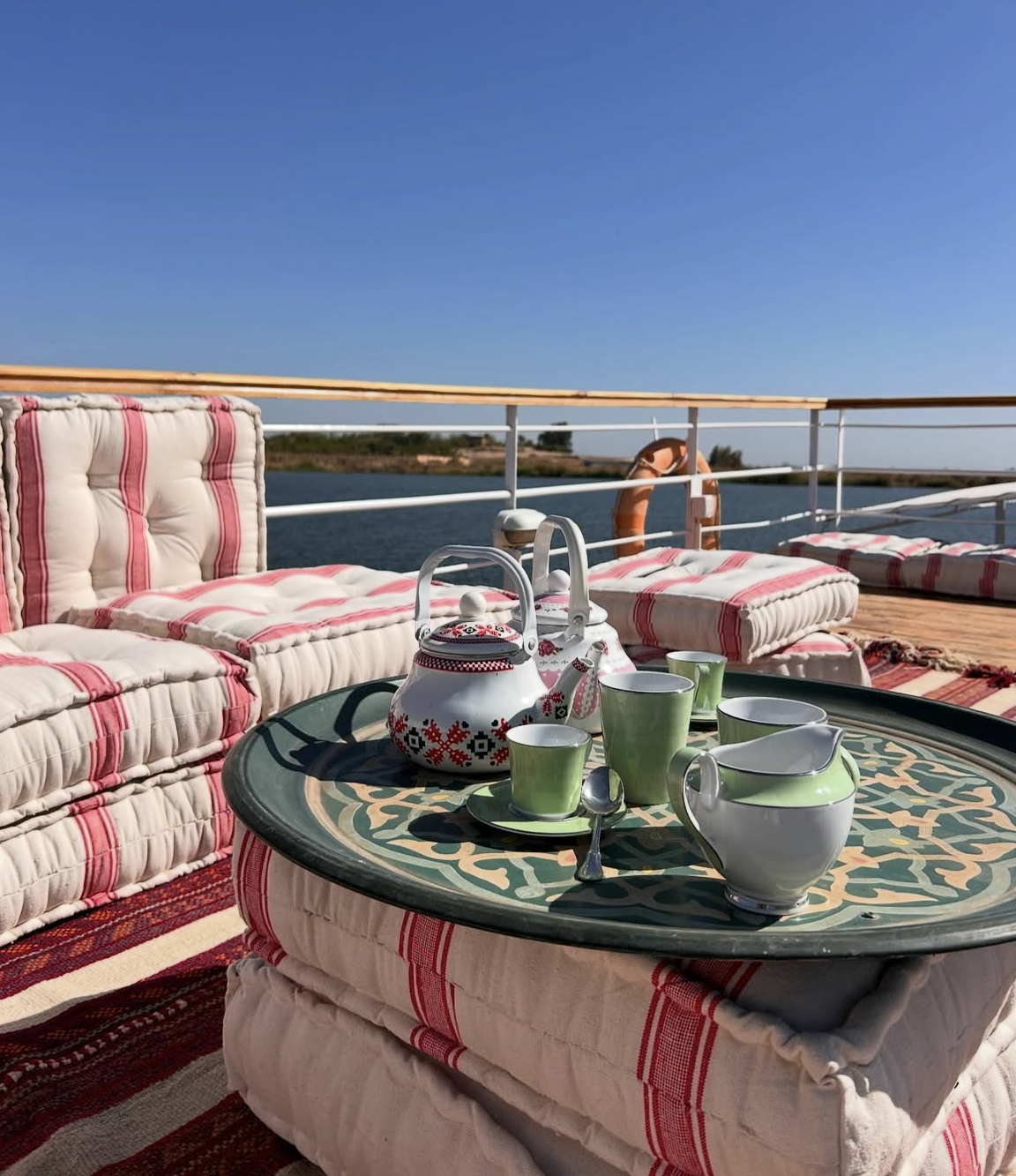
Tea time will be served on the beach! Overnight in Wadi el Arab.
Wednesday: AMADA – DERR – PENNOUT – QASR IBRIM
Breakfast on board during the navigation
Visits:
Amada visit. the temple of Derr and the tomb of Pennut. This site is rich by the discovery of
its temple moved in a single block during the construction of the dam. Our guide gives all the
explanations on the technique used. Customers will be able to recreate the miracle of Abu
Simbel in the naos of the temple of Derr, "the little abou".
- Amada Temple: This building, dedicated to Amon and Rê-Horakhty, was built under
Thutmose III and his son, Amenhotep II (sanctuary and vestibule). Thutmose IV had the
hypostyle hall erected and Sethi I erected the pylon. The latter and his son, Ramses II,
brought some restorations and decorations to it.
- The temple-spéos of Derr (originally on the east bank): This 33 m spéos, built under
Ramses II in the second half of his reign, is dedicated to Amon-Re. Its plan and
orientation are identical to those of Abu Simbel, except for the monumentality and the
four colossi. We observe in the sanctuary, the same gods seated in the niche: RêHorakhty,
deified Ramses II, Amon-Rê and Ptah.
- The funeral chapel of Nubia viceroy, Pennout: "Royal son of Kush" under Ramses VI (XXth
dynasty), Pennout is buried in Aniba, on the west bank in front of Qasr Ibrim. His tomb
has only one room.
You’ll time for a well-deserved swim! Resuming navigation to Qasr Ibrim
Stop near the ruins of Qasr Ibrim fortress. This fortified city occupied the sandstone
massif on the eastern bank of the Nile, about 80 m high. It dominated the plain of Aniba
(west bank) and its administrative center, residence of Nubia viceroys under Egyptian
domination. Today, the High Dam reservoir has eradicated a height of about sixty
meters, no longer making Qasr Ibrim the stronghold of Antiquity. 240 km from Aswan
and 50 km from the Sudanese border, Qasr Ibrim imposed itself in Lower Nubia for
three millennia.
Back on navigation and overnight in Toshka.
Thursday: TOSHKA – ABU SIMBEL
Breakfast on board and navigation to Abu Simbel (around 05hours of navigation)
Champolion said "This great temple in itself is worth the trip to Nubia" This comment
perfectly sums up the splendor of the site. Customers find out how the temples were
saved. Our guide explains the history and power of Ramses II which cannot be ignored
by the grandeur of this marvel.
The Great Temple of Abu Simbel is a hemisphere located in Abu Simbel, Egypt. It is
dedicated to the cult of Amun, Re, Ptah and Ramses II deified. Most of it is carved out
of rock, including the facade consisting of four colossal statues of seated Ramses II as
well as other statues, bas- reliefs and friezes. The parts not cut into the rock are a
peribola and a pylon made of Nile silt bricks.Originally carved out of the hill of Méha, in Nubia, it was moved with the small temple
on top of the original cliff in order to save it from the rising waters of Lake Nasser
caused by the construction of the high dam of 'Aswan in the 1960s. In order to
reconstruct the original site, the temple is covered with a hollow artificial hill.
Overnight in Abu Simbel
Option to attend Sound and light show of Abu Simbel Temple
Friday: ABU SIMBEL
Disembarkation after breakfast on board at around 08:00am
What’s Included?
Accommodation
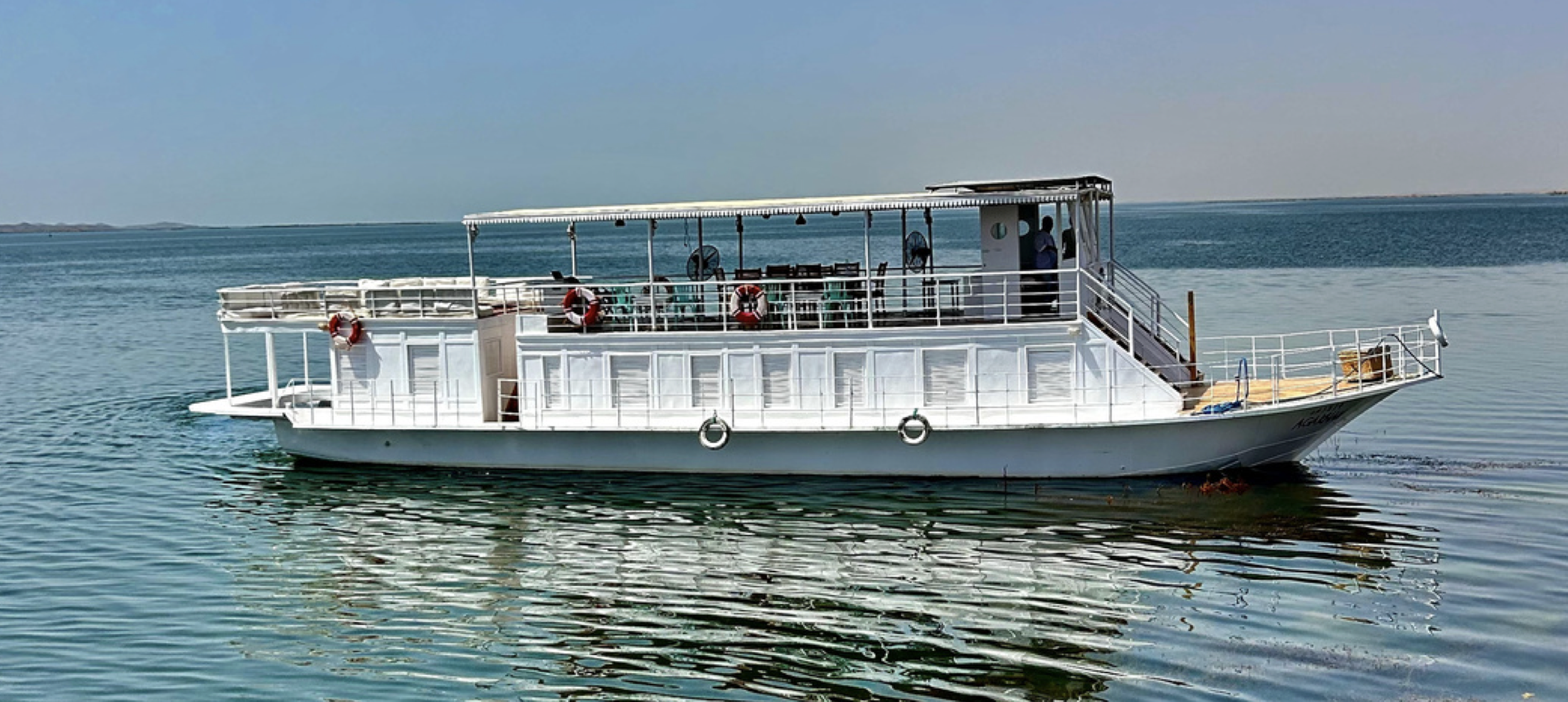
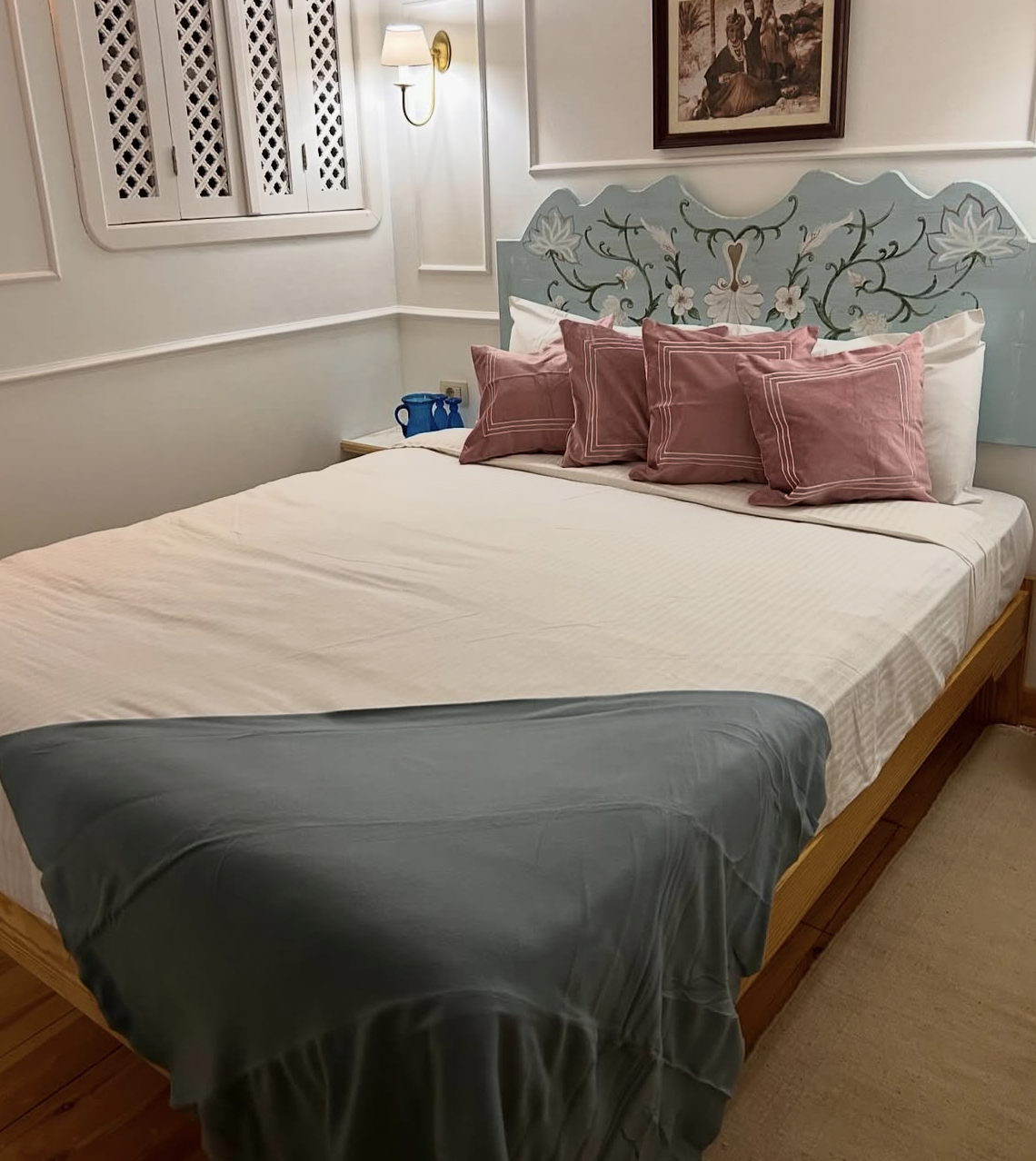
4 nights aboard a private Yacht with ensuite cabins
Meals & Dining
Daily breakfasts, lunches, and dinners curated on board the ship
Drinks on board: mineral water - tea - mint tea - Turkish coffee - soft drinks
Curated Excursions & Experiences
Private visits to historic sites
Hiking, sandboarding, swimming
Onboard Comforts & Amenities
Elegant, quiet cabins with personal storage and lounge spaces
Wifi
Local Experts & Crew
Professional crew and captain ensuring a smooth voyage
English Speaking Guide
Transfers & Logistics
Transport from Aswan Hotel to Ship
Transport from Abu Simbel back to Aswan in a Mini-Bus
Not Included
Internal flights from Abu Simbel back to Aswan
Airport transfers to or from Abu Simbel or Aswan
Meals and tours not specified in the itinerary
Tips for guides, drivers, and ship staff
Drinks on board: Nespresso coffee, Espresso Coffee (out of Breakfast) & fresh juice
Alcoholic Beverages
Atmosphere Onboard
Peaceful, elegant, with a strong focus on relaxation and historical storytelling, the limited phone connectivity on Lake Nasser adding to the charm, encouraging you to truly immerse yourself in the experience and disconnect from the hustle of everyday life
| Cabin Type | Price (Per Person) | Notes | Availability |
|---|---|---|---|
| Double Cabin Sharing SOLD OUT | |||
| Single Cabin SOLD OUT |
Contact Us
For questions or to reserve your spot, please contact us:
thecuratedpassenger@gmail.com
+ 1 323.608.8553.
We’re happy to help with cabin selection, itinerary details, or any special requests.